
Gynaecology · Procedures
Hysteroscopy
Hysteroscopy allows the inside of the uterus to be examined with a thin optical instrument passed through the cervix — without any abdominal incisions.
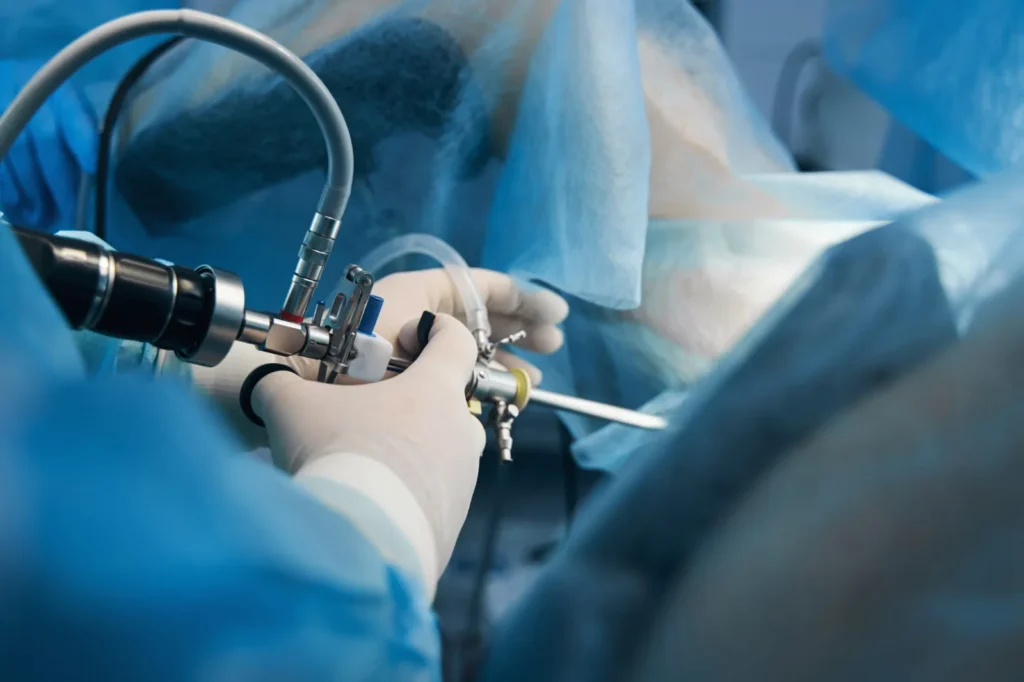

Diagnostic hysteroscopy
It shows whether there are changes in the uterine cavity that may cause heavy or irregular bleeding, pain, or difficulty conceiving or maintaining a pregnancy. It allows precise localisation of polyps, fibroids, adhesions and other abnormalities, and biopsies can be taken for histopathology.
Operative hysteroscopy
Often a continuation of the diagnostic procedure. Endometrial polyps, submucosal fibroids and intrauterine adhesions can be removed, and anatomical anomalies such as a uterine septum can be divided. It may also be part of the treatment of benign endometrial hyperplasia and heavy menstrual bleeding.
Assessment and preparation
The decision on hysteroscopy is made at a consultation — based on symptoms, examination and ultrasound. During the assessment I explain:
- the purpose of the procedure and what we can learn from it
- where it is performed and the type of anaesthesia, matched to the scope of the procedure
- the best timing in the cycle and tests needed beforehand
- possible symptoms afterwards and advice for the following days
Hysteroscopy is one of the main areas of my practice, particularly in the investigation of infertility and recurrent miscarriage.
I trained in hysteroscopy and laparoscopy at the clinics of the Medical University of Silesia and have performed minimally invasive procedures for many years.
Book a gynaecology consultation
Appointments take place at 1 Maja 88a, Katowice. Check available times in the ZnanyLekarz calendar or call the reception desk. Consultations are available in English.